
Little Things That Make a Big Cleanup Easier.
Renting a dumpster is pretty simple, but a few small decisions can save space, prevent headaches and make delivery and pickup much easier. These are practical tips from Bill, the owner and operator of Huckleberry Dumpsters, based on the things that actually matter when a dumpster gets delivered, loaded, picked up and hauled down the highway.
Fast. Simple. Local. And hopefully a little easier after reading this.
This Isn't the Terms & Conditions Page.
Huckleberry Tips is about making your cleanup easier, getting more useful space from your dumpster, avoiding surprises and helping make sure the loaded dumpster is ready to travel safely when the project is finished.
Save Space
Use the room you rented for debris, not giant pockets of air.
Watch the Weight
A dumpster can reach its weight limit long before it looks full.
Make Access Easy
Plan for delivery, loading and the day Bill comes back.
Load for the Road
The finished load eventually has to travel safely down the highway.
Don't Pay to Haul Air.
A giant cardboard box tossed into the bottom doesn't look like a problem. Then everything lands on top of it, and suddenly part of the dumpster is occupied by...air.
Flatten boxes. Break down bulky items when practical. Fill useful empty spaces. Lay flat material flat. Avoid creating giant voids under the load.
Build the Load. Don't Just Throw the Load.
Use the door while it's accessible. Walk large items in, work from farther inside toward the door, keep heavy material low, distribute weight reasonably and use smaller appropriate debris to fill gaps.
Use the Door Before You Bury the Door.
The walk-in door can save a lot of lifting while the dumpster is still accessible. Walk bulky items in instead of wrestling everything over the wall, then remember that the door eventually needs to close and secure again.
Heavy Doesn't Have to Look Full.
Volume and weight are different limits. A load can look half empty and still be surprisingly heavy.
Volume
Household junk, furniture, boxes and lighter debris can use physical space quickly.
Weight
Concrete, dirt, brick, tile and other dense material can become extremely heavy without filling much of the dumpster.
15-Yard Dumpster
20-Yard Dumpster
Don't Build a Mountain in One Corner.
Heavy material should generally be distributed reasonably rather than concentrated into one giant pile at one end or corner.
The Top Rail Is the Finish Line.
Everything needs to remain safely contained at or below the top of the dumpster.
Would You Want Your Family Driving Behind It?
Before pickup, stand behind the dumpster and look at the load. Imagine your family's vehicle following Bill's truck down the highway. If something is sticking above the rail, hanging over a side or looks like it could escape the container, the load isn't ready to travel.
Light Doesn't Mean Harmless.
Cardboard, plastic, insulation, packaging and small scraps may weigh very little. That's also why wind can move them. Keep lightweight debris contained and below the top rail.
If It Sticks Out, It Doesn't Fit Yet.
Lumber, pipe, trim, branches, furniture and other awkward material may need to be repositioned, laid flatter or broken down when appropriate.
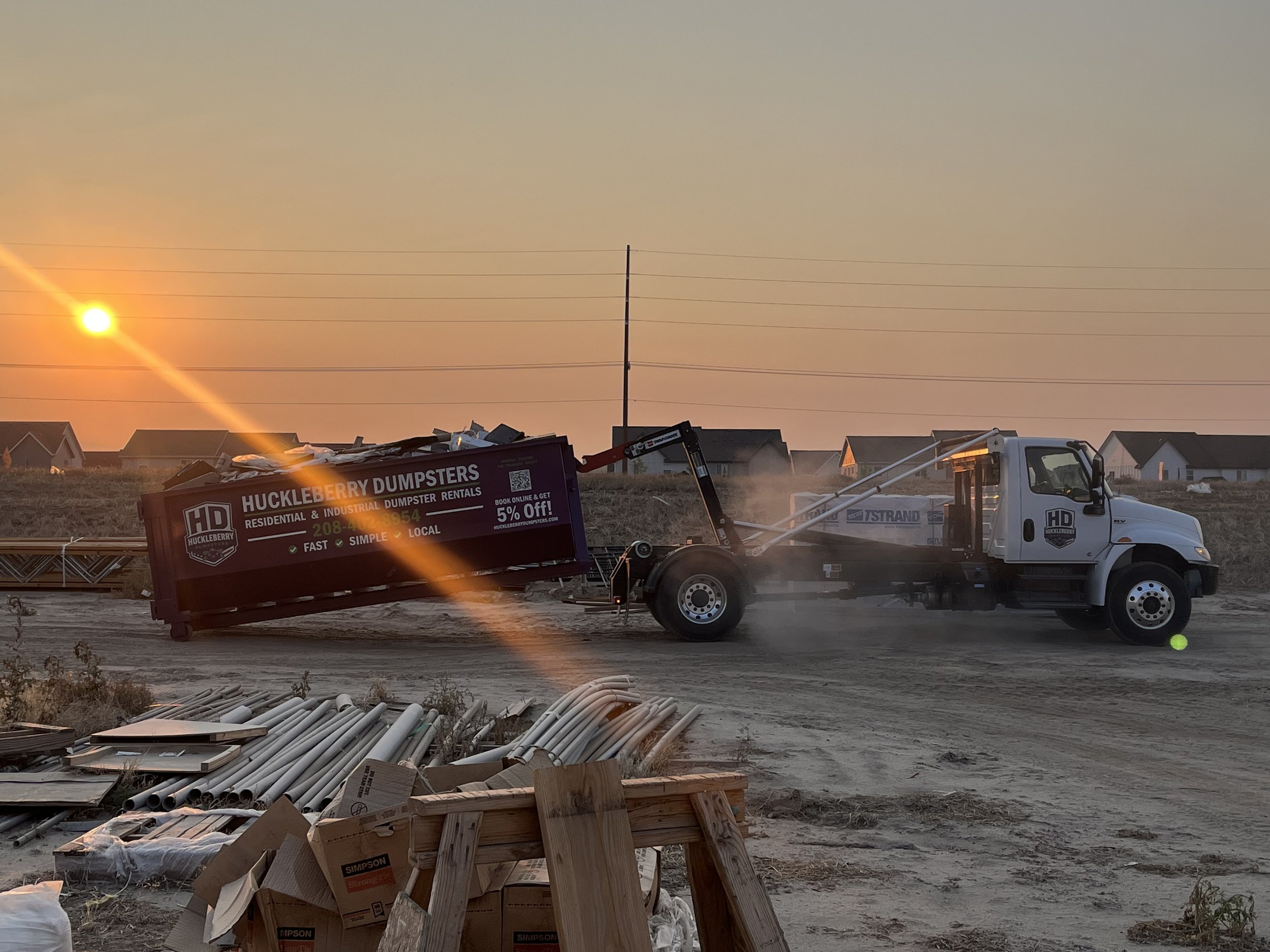
Look Up. Look Down. Then Pick the Spot.
The closest spot isn't always the easiest spot. Think about loading the dumpster and getting it back out.
Look Up
- Branches
- Power lines
- Roof overhangs
- Basketball hoops
Look Down
- Sprinklers
- Pavers
- Soft ground
- Septic components
- Questionable surfaces
Look Ahead
- Truck approach
- Dumpster door access
- Debris loading path
- Future pickup access
Soft Ground Has a Long Memory.
Dirt or grass that looks solid today may behave differently after rain or irrigation. A loaded dumpster and hooklift truck are heavy. Grass, dirt or questionable ground? Ask first.
Added Protection Helps. It Isn't Magic.
Huckleberry's optional RolliSkate can provide added protection during placement and pickup, and boards or other protection methods may help in some situations. No protection method makes every surface indestructible.
Tell Bill about new or cracked concrete, soft asphalt, pavers, steep grades or anything you're concerned about.
Wrong Spot? Don't Move It Yourself.
Don't push it, pull it, hook your pickup to it or attempt to reposition it yourself.
Remember, Bill Has to Get It Back Out.
Monday: dumpster delivered. Tuesday: contractor trailer arrives. Wednesday: pallets show up. Thursday: somebody parks beside it. Friday: Bill comes for pickup.
Keep vehicles clear, don't stack materials around the container, keep gates accessible and preserve the truck approach. If the jobsite changes, a quick text can help.
Inside the Box Means Inside the Box.
Don't pile debris beside the dumpster, lean material against it or wedge items between the container and a fence. If you're running out of safe room, don't build a second pile around the dumpster.
Mystery Liquid = Stop.
Unmarked bucket? Old automotive fluid? Paint or chemical? Unknown jug from the back of the garage?
Don't pour it in. Don't bury it. Don't guess. Some household products need separate handling or disposal. Leave it out and text Bill.
A Dumpster Isn't a Swimming Pool Either.
Rain can collect and absorbent debris can become heavier. Deliberately pouring liquids into a dumpster can create weight, disposal and cleanup problems.
When the dumpster is tilted during loading or unloading, collected water or liquid can move and drain from the container. What looked harmless while the dumpster was flat can suddenly become a mess.
Don't Use the Dumpster as a Burn Bin.
Yes. Apparently this needs to be said.
Burning debris inside a dumpster to create more room will damage the dumpster and can create a serious fire hazard. No fires, no hot ashes, no smoldering debris and no "it looked completely out."
If You Have to Hide It, That's Probably Your Answer.
If you're wondering whether something belongs in the dumpster, don't bury it underneath everything else and hope for the best. Leave it out, take a picture and text Bill.
Yesterday's Load and Today's Load May Not Weigh the Same.
Rain can add moisture. Absorbent material can retain water. Wind can move lightweight debris. Snow can complicate a load. You don't need to fear the weather, just pay attention to what it's doing to the material you're loading.
The Best Dumpster Load Starts Outside the Dumpster.
A dumpster doesn't have to be the first destination for everything you're getting rid of.
Dumpster Weight & Size Calculator
Estimate weight, space and dumpster size before you load.
Estimate My Dumpster Size →Donation Guide
Find another home for useful items.
Explore →Recycling Resources
Find better destinations for recyclable and special materials.
Explore →Seasonal Cleanup Guide
Plan around the Treasure Valley seasons.
Explore →Project Planners
Choose a guide for the cleanup or project you're tackling.
Browse Project Planners →Huck & Go: Two Hours Goes Fast. Preparation Makes It Go Far.
Huck & Go is a limited seasonal Huckleberry option. When it's available, the two-hour rental works best when the sorting is already finished and the debris is staged before the dumpster arrives.
The 30-Second Huckleberry Walkaround.
One quick look before pickup can catch most of the problems that make a loaded dumpster harder to haul.
When in Doubt, Ask Bill.
You don't have to memorize every material, weight consideration, placement issue or loading tip on this page. I'm the owner and operator of Huckleberry Dumpsters, and the phone number on this website is my cell phone.
If you're standing in the garage holding something and wondering whether it can go in the dumpster, take a picture and text me. Yes, a picture helps.
Make the Cleanup a Little Easier.
Choose the Huckleberry option that fits the project, or text Bill if you're not sure where to start.
Fast. Simple. Local.
